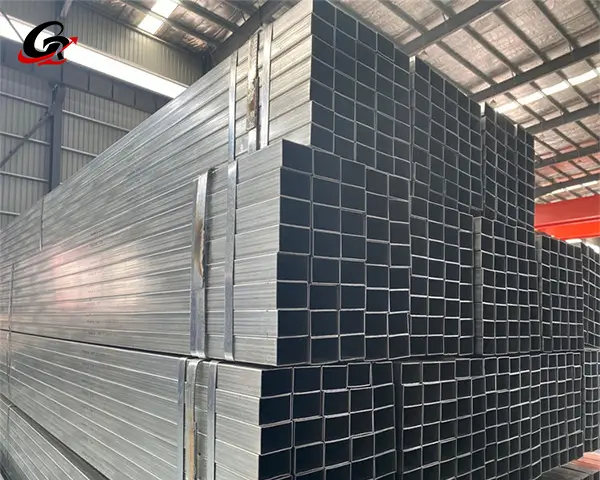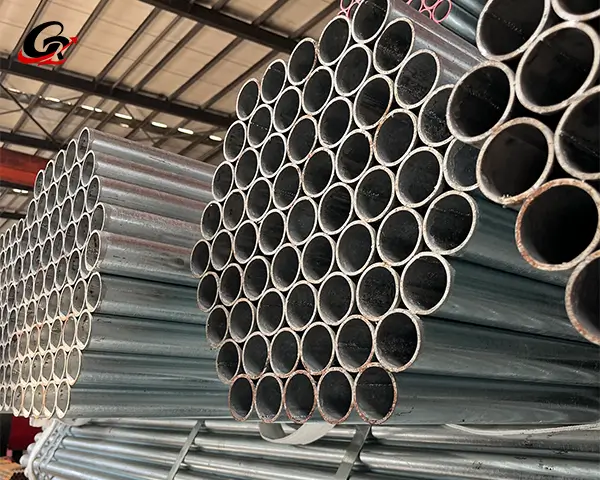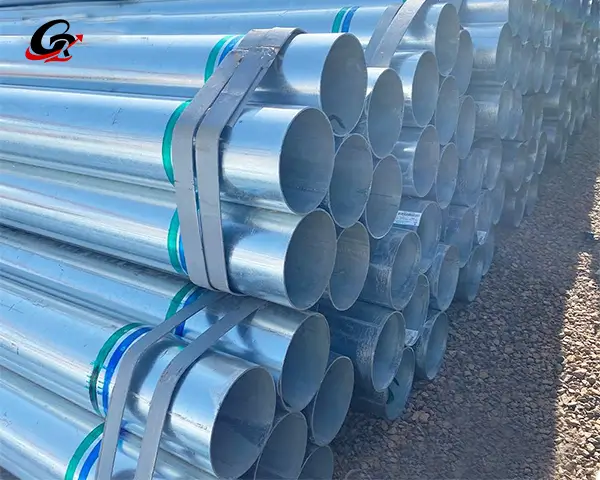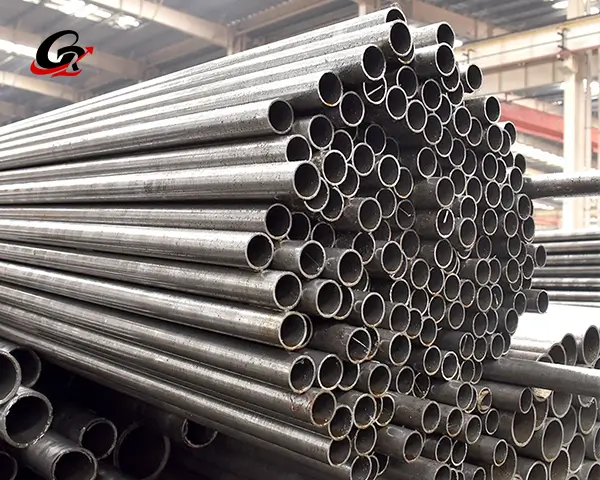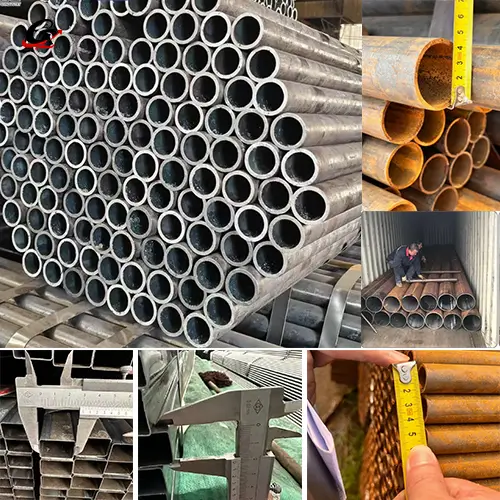
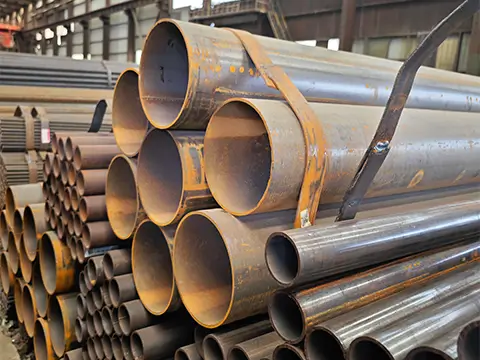
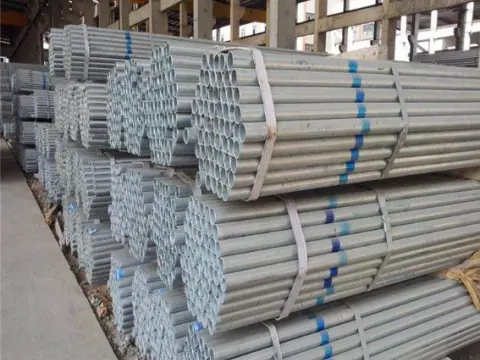
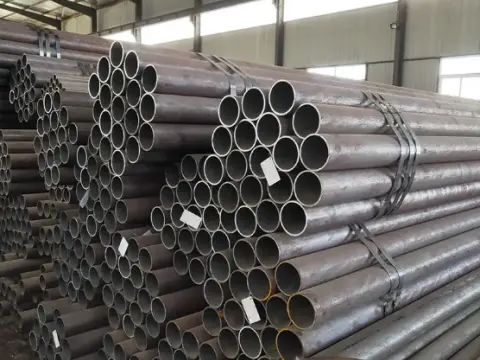
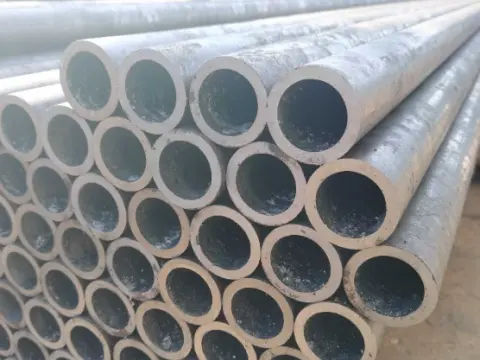
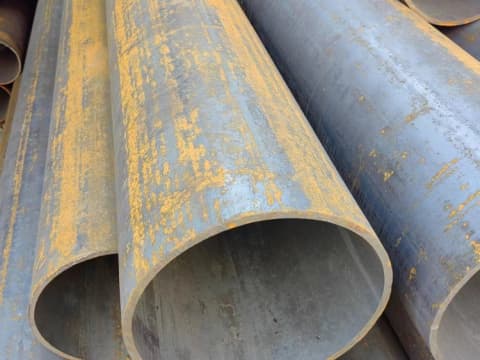
Low‑carbon steel pipe is manufactured from low‑carbon steel base material with carbon content below 0.25%. It features excellent ductility and weldability, making it the most widely used general‑purpose steel pipe. Its original black mill finish can be used as‑is, or subjected to anti‑corrosion surface treatments such as hot‑dip galvanizing and painting.
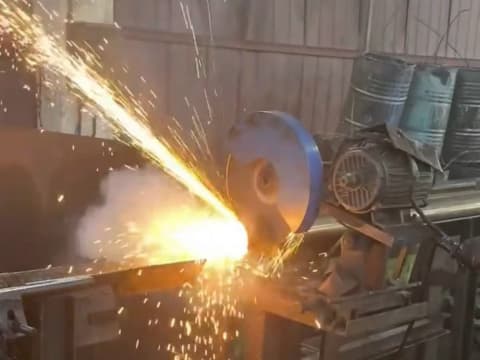
Glory Steel is a manufacturer and supplier of low‑carbon steel pipes. We produce two major categories: hot‑rolled and cold‑drawn low‑carbon steel pipes. We offer a broad range of low‑carbon steel grades, various wall thicknesses and outer diameters, supporting all cross‑section shapes as well as mechanical machining services.
Specifications
| Item | Low‑Carbon Steel Pipe |
|---|---|
| Material | Q195, Q235B, 20#, ASTM A53 Gr.B, STK400, S235JR (equivalent to St37‑2) |
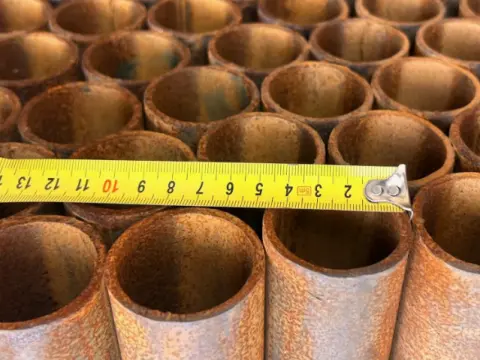
| Outer Diameter | 1/2”‑24” (21.3mm‑610mm) |
| Wall Thickness | SCH10‑SCH80 |
| Length | 1‑12 meters |
| Surface Finish | Black pipe, hot‑dip galvanized, painted, anti‑rust oil coated |
| Standards | ASTM A53, GB/T3091, EN10255, BS1387 |
| MOQ | 10 metric tons |
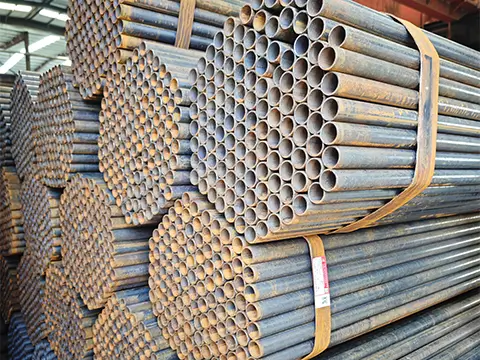
| Packing | Export‑standard bundled packaging |
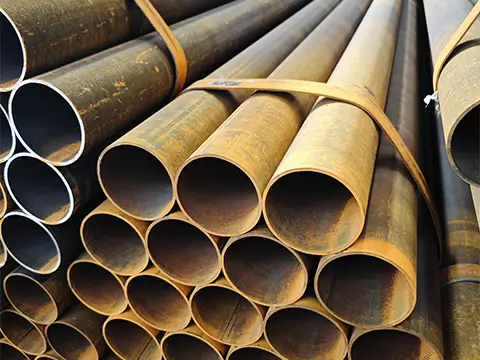
Definition of Low‑Carbon Steel
What is Low‑Carbon Steel?
Low‑carbon steel refers to carbon steel with carbon content below 0.25%, also known as mild steel. Compared with medium‑carbon steel (0.25%~0.60%) and high‑carbon steel (0.60%~2.0%), low‑carbon steel has the following distinct properties:
| Performance | Low‑Carbon Steel | Medium‑Carbon Steel | High‑Carbon Steel |
|---|---|---|---|
| Strength | Fair | Relatively high | Highest |
| Ductility | Excellent | Good | Poor |
| Weldability | Excellent | Fair | Poor |
| Cold Bending Property | Excellent | Good | Poor |
| Hardness | Low | Medium | High |
| Machinability | Good | Excellent | Fair |
| Price | Lowest | Medium | Relatively high |
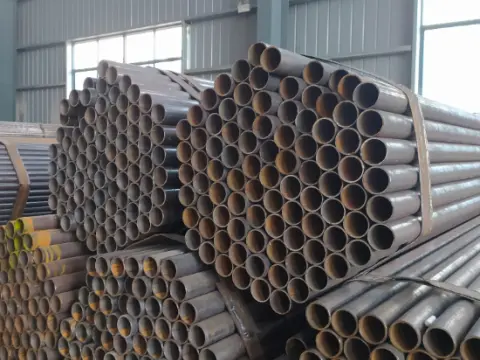
Key Features
- Superior welding performance: Low carbon content eliminates pre‑heating and post‑treatment requirements during welding. No welding cracks occur; bending and punching operations are simple.
- Good hot & cold workability: Outstanding performance in cold forming processes such as cold bending and cold drawing; also well‑suited for hot working including hot bending, hot expanding and hot extrusion.
- High versatility: Great adaptability for various processing techniques and dimensional requirements, serving as the optimal tube blank for galvanized steel pipes.
- Cost‑effective: Low carbon content keeps material costs far lower than medium‑ and high‑carbon steel, making it the cost‑optimal solution for 80% of general industrial applications.
Low‑Carbon Steel Pipe Sizes
| NPS | Outer Diameter (mm) | SCH40 Wall Thickness / Weight | SCH80 Wall Thickness / Weight |
|---|---|---|---|
| 1/2″ | 21.3 | 2.77 / 1.27 | 3.73 / 1.62 |
| 3/4″ | 26.7 | 2.87 / 1.69 | 3.91 / 2.20 |
| 1″ | 33.4 | 3.38 / 2.50 | 4.55 / 3.24 |
| 1‑1/2″ | 48.3 | 3.68 / 4.05 | 5.08 / 5.41 |
| 2″ | 60.3 | 3.91 / 5.44 | 5.54 / 7.48 |
| 3″ | 88.9 | 5.49 / 11.29 | 7.62 / 15.27 |
| 4″ | 114.3 | 6.02 / 16.07 | 8.56 / 22.32 |
Note: Wall thickness unit: mm; Weight unit: kg/m.
For other SCH grades (e.g. SCH10, SCH20) as well as square / rectangular tube sizes, please feel free to contact us for inquiry.
Mechanical Properties
| Steel Grade | Yield Strength (MPa) | Tensile Strength (MPa) | Elongation (%) |
|---|---|---|---|
| Q195 | ≥195 | 315–430 | ≥30 |
| Q235B / S235JR / A53 Gr.B | ≥235 | 370–500 | ≥25 |
| 20# Carbon Steel | ≥245 | 410–550 | ≥24 |
| St37-2 / STK400 | ≥235 | 360–510 | ≥26 |
Product Classification
1. By Rolling Process
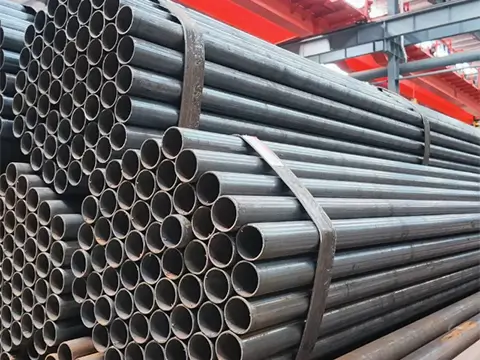
- Hot‑rolled low‑carbon steel pipe: Formed by rolling at temperatures above ambient temperature, normally with a matte black hot‑rolled surface.
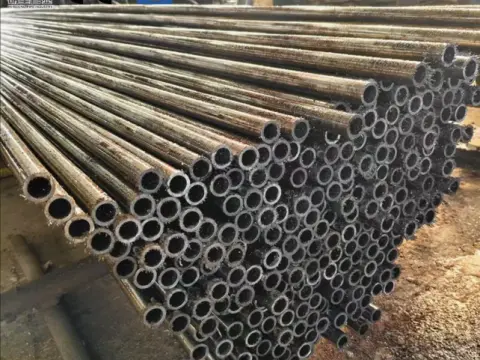
- Cold‑drawn low‑carbon steel pipe: Further processed from hot‑rolled pipes via rolling at room temperature, featuring a relatively smooth surface.
2. By Manufacturing Process
- Welded low‑carbon steel pipe: Produced by cold‑forming Q235 hot‑rolled steel strip followed by welding.
- Seamless low‑carbon steel pipe: Manufactured from steel billet through piercing, hot‑rolling or cold‑drawing.
3. By Cross‑Section Shape
- Round low‑carbon steel pipe: For fluid transportation and structural support.
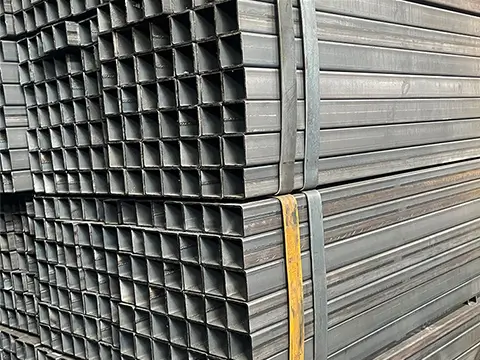
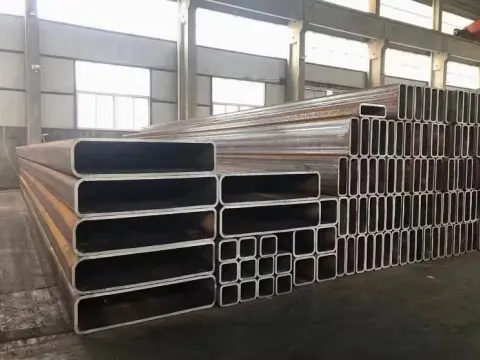
- Low‑carbon square pipe: Mainly used for frames, structures, furniture and machinery manufacturing.
- Low‑carbon rectangular pipe: Similar to square pipe, primarily for structural fabrication.
- Special‑shaped low‑carbon pipe: Widely applied in decoration and profile‑shaping projects.
Applications
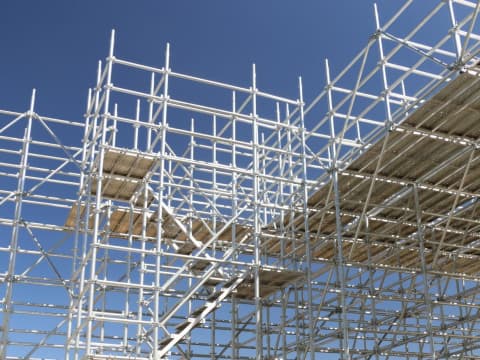
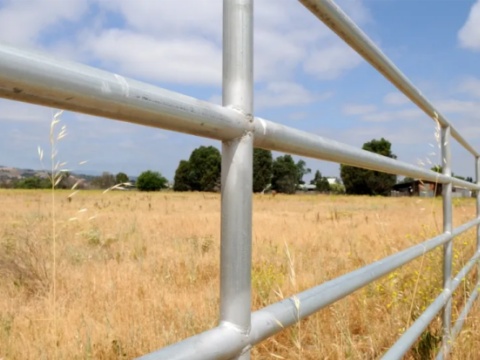
- Building structures: Scaffolding pipes, site support pipes, fence pipes.
- Fluid transportation: Drainage, low‑pressure fire‑fighting pipelines, low‑pressure auxiliary oilfield pipelines, agricultural irrigation pipes.
- Machinery & hardware: Agricultural equipment, workbench supports, tool handles, trailer handrails, storage racks and shelves.
- Municipal engineering: Factory pipelines, electrical conduits, low‑pressure piping systems.
Our Production Standards
| Product Type | Applicable Standards |
|---|---|
| Welded low‑carbon round pipe | ASTM A53 / GB/T 3091 / EN 10255 / BS 1387 |
| Seamless low‑carbon round pipe | ASTM A106 / GB/T 8163 / EN 10216 |
| Cold‑drawn precision low‑carbon steel pipe | ASTM A519 / GB/T 3639 / EN 10305 |
| Low‑carbon square / rectangular pipe | ASTM A500 / GB/T 6728 / EN 10219 |
Pricing of Low‑Carbon Steel Pipes
Prices of low‑carbon steel pipes are closely linked to market prices of raw materials (hot‑rolled steel strip or steel billet), hence not fixed. Besides raw material cost, pricing is also affected by manufacturing process, cross‑section profile, surface treatment and order quantity.
Price reference for identical specifications:
- Seamless pipe > Cold‑drawn pipe > Welded pipe.
- Round pipe < Square / Rectangular pipe.
- Precision pipe > Conventional pipe.
- Black mill‑finish pipe < Cold‑drawn bright pipe < Oil‑coated pipe.
FAQ
Q: Can low‑carbon steel pipes be used for drinking‑water pipelines?
A: Yes. However, anti‑corrosion treatment such as hot‑dip galvanizing or plastic coating (PE / EP lining) is required to avoid rust and water contamination. Bare black pipes are not recommended for drinking‑water systems.
Q: What is the difference between Q235B and 20# steel?
Both are carbon structural steels. Q235B is a common carbon structural steel with moderate strength and excellent weldability, widely used for general structures. 20# is high‑quality carbon structural steel with stricter chemical composition control and better comprehensive mechanical properties, applied for mechanical components and pressure pipelines.
Q: How to choose between welded pipe and seamless pipe?
Select welded pipes for general engineering structures and low‑pressure fluid transmission — they deliver high cost‑performance and uniform wall thickness. Choose seamless pipes for high‑temperature, high‑pressure conditions and critical safety‑related components.
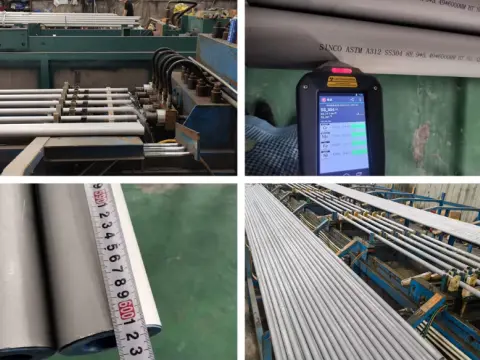
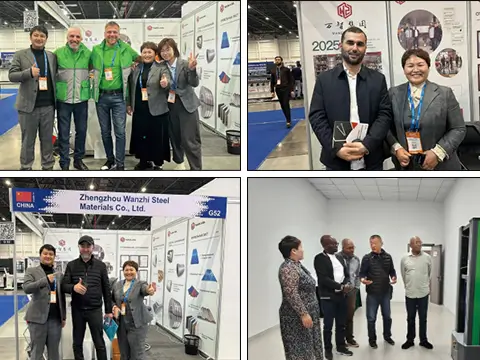
Glory Steel Plant, located in Tianjin, China, is an ISO 9001, ISO 14001, and CE-certified factory with an annual output of 100,000 tons. Specialize in producing low-carbon steel pipes, as well as galvanized pipes and ZAM pipes, and provide machining services such as cutting, bending, and perforation. With our high-quality products and services, we export to over 120 countries.