Hot rolled steel tube and cold drawn steel tube are two common production processes for seamless steel tubes. Hot rolling is performed at high temperatures, hence the name “hot rolled”. Cold drawing takes hot rolled tube blanks as raw materials and carries out further drawing processing at room temperature, so it is named “cold drawn”.
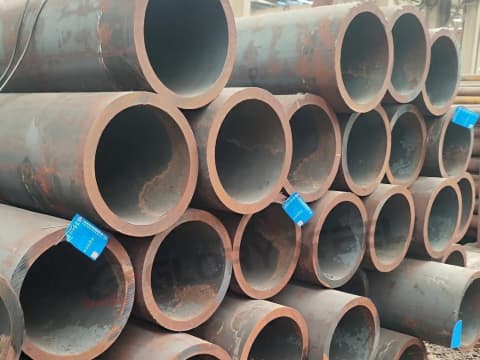
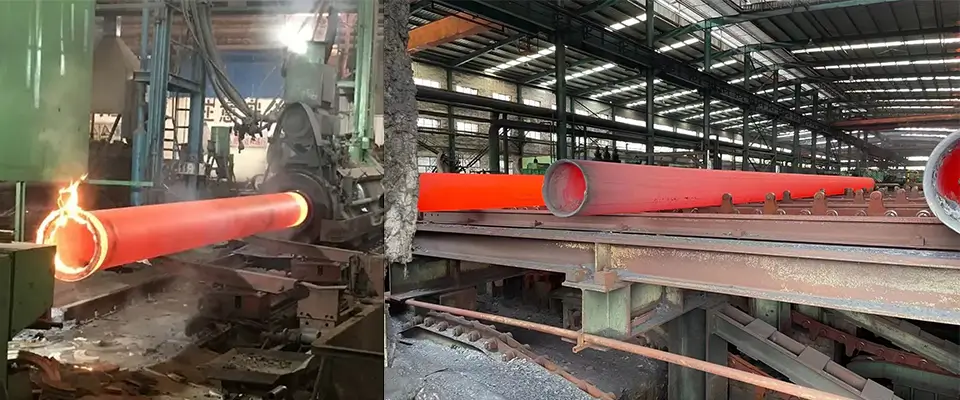
Hot-rolled seamless carbon steel pipe
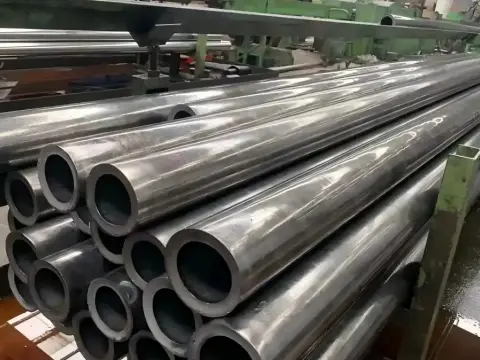
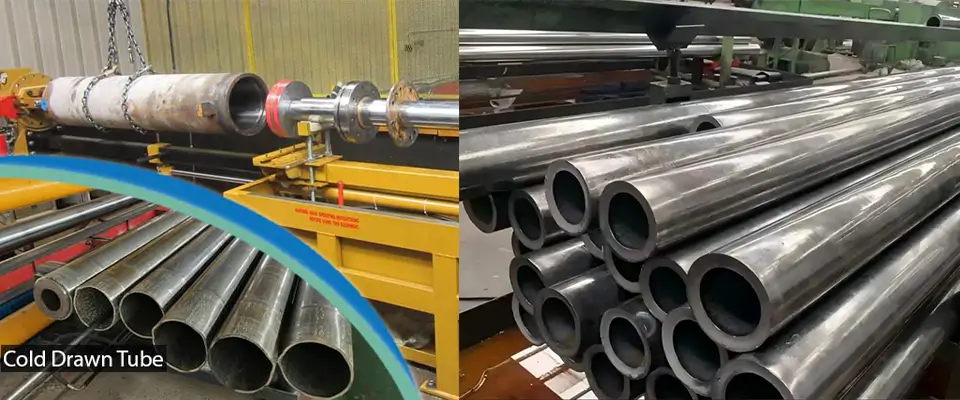
GB 3639 Seamless Cold Drawn Precision Tube
Process Differences
Hot Rolled Steel Tube: Round steel billets are pierced and rolled at high temperatures to form rough tubes in one step, without drawing or cold working procedures.
Cold Drawn Steel Tube: Manufactured based on hot rolled tube blanks. The blanks go through multiple drawing passes via dies at room temperature, followed by subsequent finishing processes.
Dimensional Accuracy Differences
Hot Rolled Tube: It is a rough processing method with relatively low dimensional accuracy, tolerance around ±0.3mm, and slight uneven wall thickness.
Cold Drawn Tube: Shaped by fixed dies, featuring high precision of wall thickness and outer diameter with tight tolerance within ±0.05mm.
Hot Rolled Tube: Covered with iron oxide scale, grainy and rough surface without luster; Ra value ranges from 12.5μm to 25μm.
Cold Drawn Tube: Smooth and clean surface, available for paint spraying and electroplating; Ra value can reach 0.4μm to 0.8μm.
Mechanical Property Differences
Hot Rolled Tube: Lower hardness than cold drawn tubes, excellent toughness and plasticity with low internal stress.
Cold Drawn Tube: Higher hardness and residual internal stress. Annealing is required during processing to relieve stress for manufacturing precision tubes.
Mechanical Indicators
Cold Drawn Tube
Hot Rolled Tube
Tensile Strength (Rm)
30%-50% higher; cold drawn 20# steel tube can reach 550MPa
Hot rolled 20# steel tube is around 380MPa
Yield Strength (Rp0.2)
Typical range: 350-550MPa
Typical range: 235-345MPa
Elongation after Fracture (A80)
5%-8% lower than hot rolled tubes, toughness reduced by about 25%
Higher, suitable for subsequent bending and forming
Impact Toughness
Reduced
Superior
Hardness (HB)
Increased
Relatively low
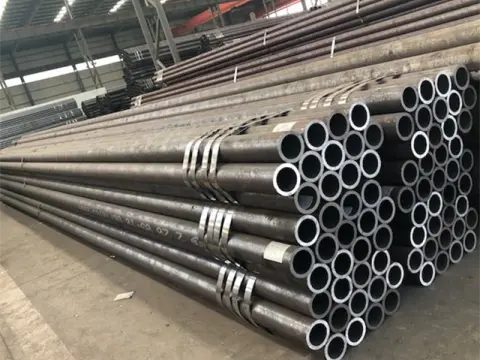
hot rolled steel pipe production line
Cost Differences
Hot Rolled Tube: Fewer production procedures, suitable for mass production at lower cost. Ideal applications with no strict requirements on surface appearance and dimensional precision.
Cold Drawn Tube: Extra multiple drawing and annealing procedures lead to higher production cost than hot rolled tubes.
Common Specification Differences
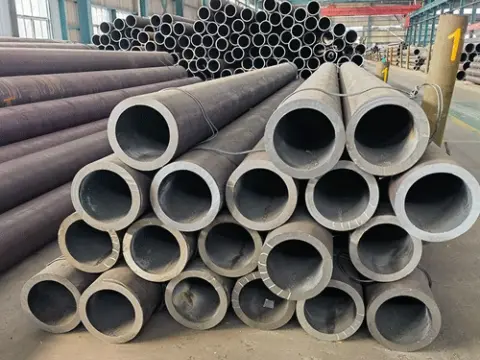
Hot Rolled Tube: High-temperature rough rolling and mass production determine it is mainly produced in large outer diameter and thick wall sizes.
Cold Drawn Tube: Precision processing technology makes it mainly used for thin-walled tubes, square, rectangular and oval steel tubes.
Application Scenario Differences
Hot Rolled Steel Tube: Structural components, industrial fluid transmission pipes, support frames for large-scale projects, load-bearing tubes.
Cold Drawn Steel Tube: Mechanical accessories, hydraulic and pneumatic pipelines, frames for precision equipment, instrument parts, hardware fittings.
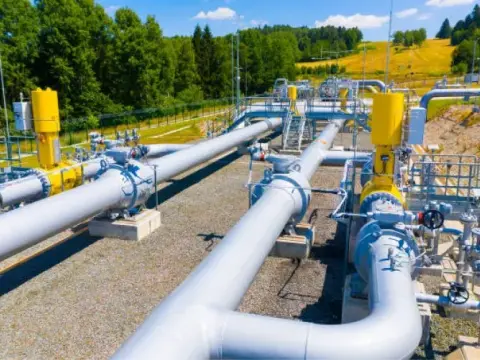
Fluid liquid transport pipeline
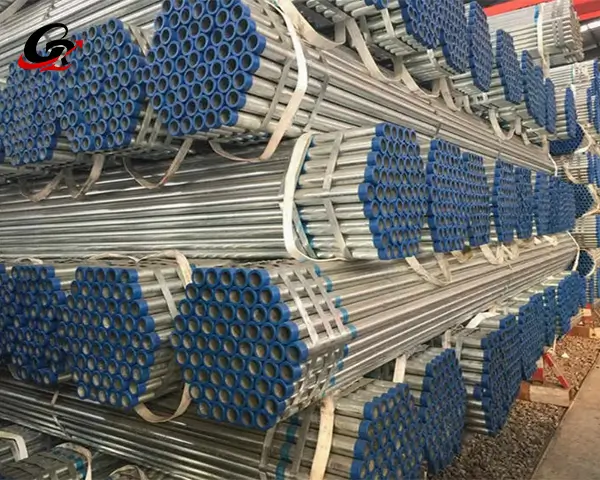
Street light pole
Comprehensive Comparison Table of Hot Rolled Tube vs Cold Drawn Tube
Dimension
Hot Rolled Tube
Cold Drawn Tube
Manufacturing Process
High-temperature piercing and rolling
Multiple drawing passes at room temperature
Dimensional Accuracy
Relatively low
Extremely high
Surface Condition
Rough
Clean and smooth
Mechanical Properties
Good plasticity and toughness
Yield strength increased by 20%-40%, reduced toughness