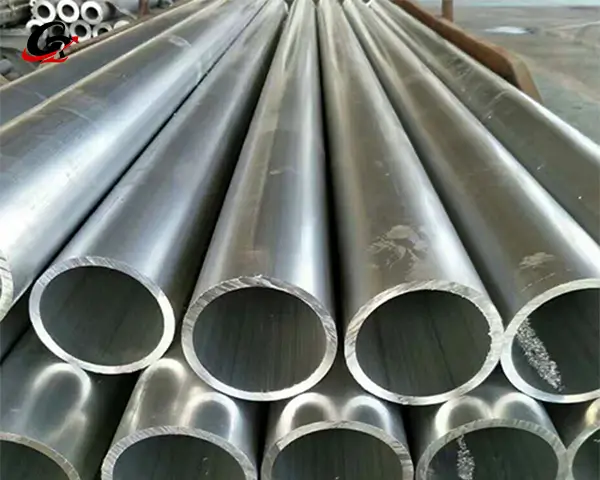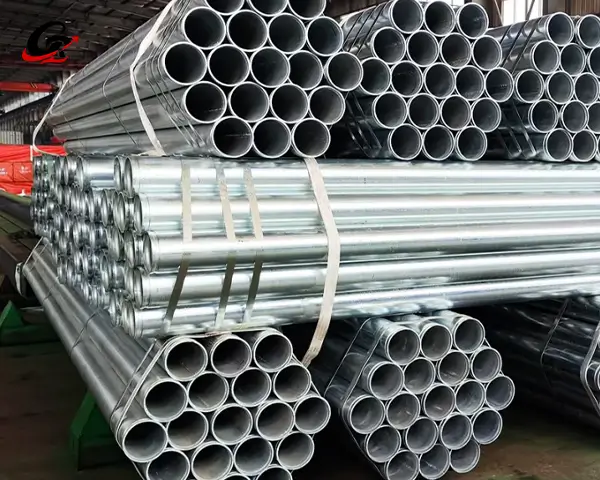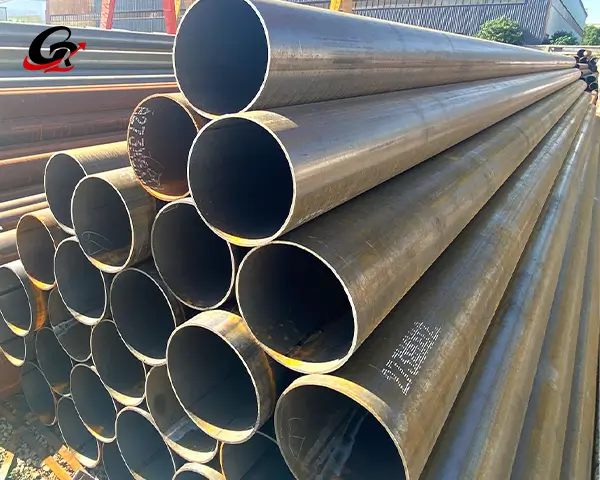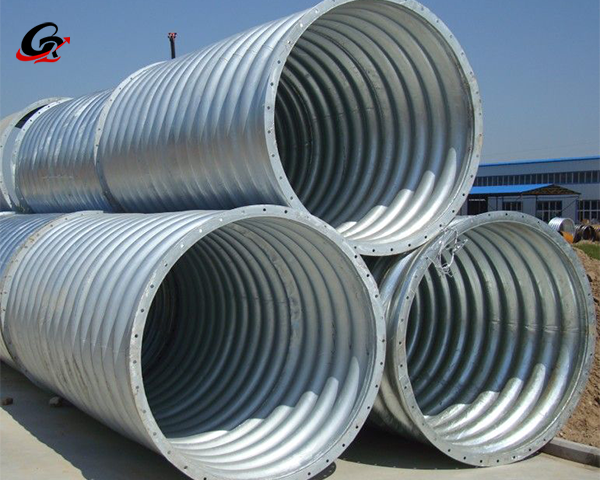
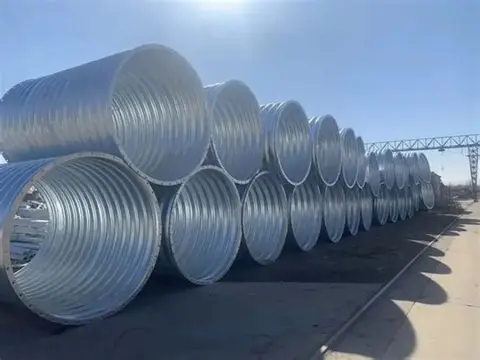
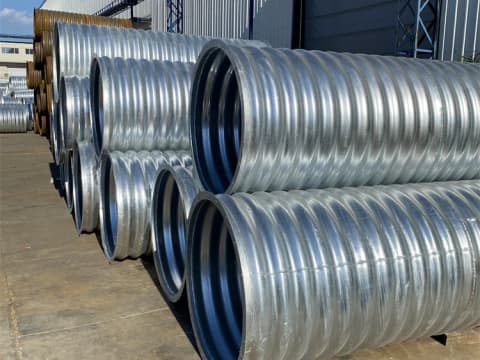
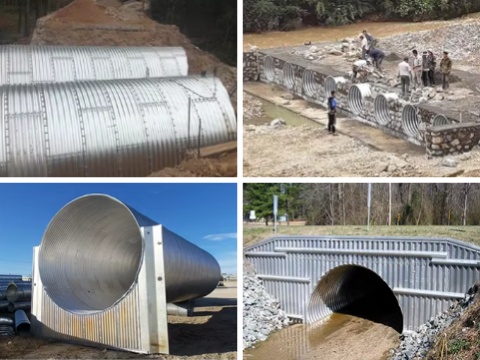
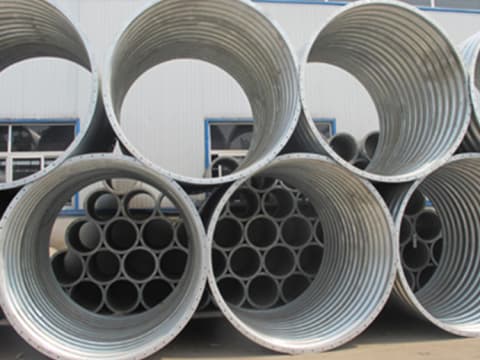
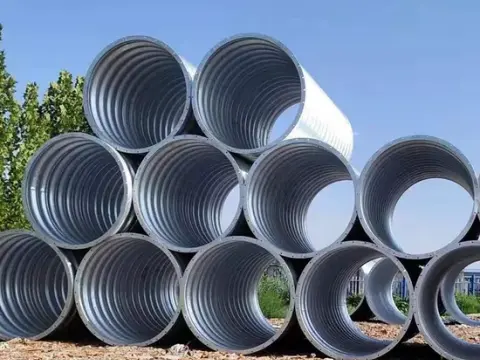
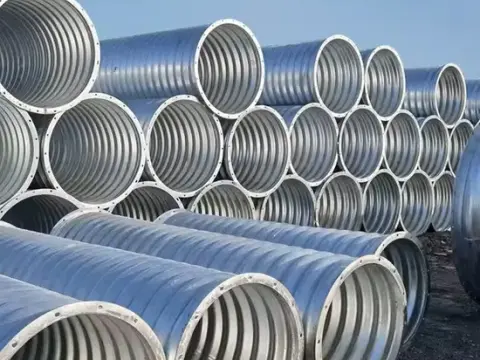
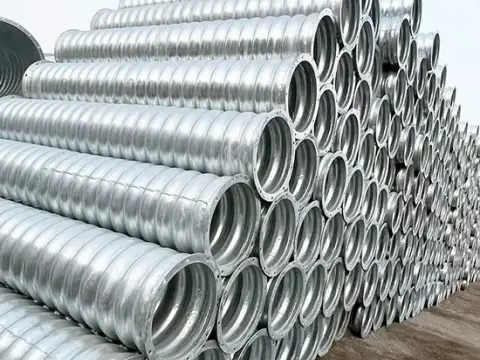
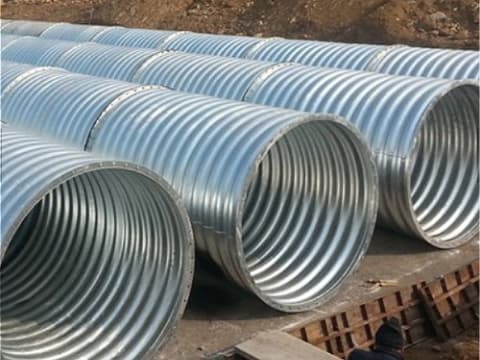
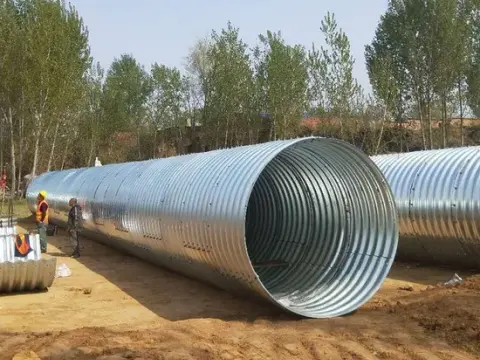
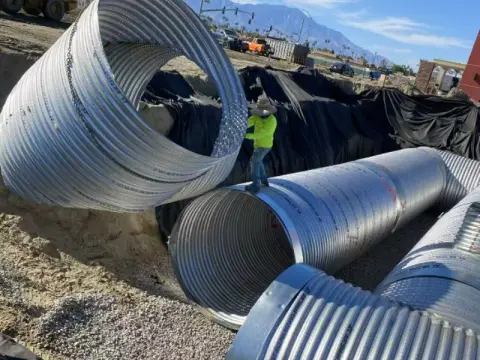
Galvanized culvert pipes, also known as corrugated metal culverts, are flexible piping systems made of rolled or assembled corrugated galvanized steel sheets. Used for underground drainage and passageways, their core feature lies in the combination of galvanized steel material and culvert function, resulting in lightweight, fast construction, strong deformation resistance, and long service life.
Glory Steel‘s galvanized culverts can be used in highway, railway, and building construction projects. They offer good flexibility and strong earthquake resistance. We use hot-dip galvanizing technology, with zinc coating ranging from Z30 to Z275. Length, sheet thickness, and corrugation can all be customized.
Specification
| Product | Galvanized culvert pipe |
| Surface Treatment | Zinc coating |
| Material | Q195/Q215/Q235/Q345, DX51D, SPCC, SGCC, GR.A/B, S235/S355, TDC51DZM, etc. |
| Zinc Coating | Z30-Z275 |
| Standard | ASTM, DIN, GB |
| Process | ERW |
| Thickness | 2.0mm ~ 12.0mm (0.08in ~ 0.47in) |
| Length | 1m, 6m (19.69ft), 6.4m (21ft), 12m (39.37ft) |
| Certificate | API, CE, BSI,JIS, ISO 9001 |
| Pattern / Hardness | Regular Spangle, Hard, Skin Pass (Yes) |
Advantages
1. Highly corrosion-resistant and long service life
The base material is hot-dip galvanized, making it suitable for highly corrosive environments. Additional asphalt or epoxy resin coatings can be added, maintaining structural integrity for 20-50 years and extending service life to 80-100 years in soil environments.
2. High compressive strength
The corrugated structure provides extremely high ring stiffness and radial load-bearing capacity, with high tensile and shear strength. Seamless or ERW welding ensures uniform wall thickness and effectively absorbs deformation energy.
3. Portable and efficient to transport
Its lightweight design makes transportation and installation very convenient. Factory prefabrication and on-site bolt connections eliminate the need for large hoisting equipment, allowing completion within hours and significantly shortening the construction period.
4. Adaptable to complex working conditions
Due to its flexible structure, even if underground settlement occurs, it effectively mitigates the “bridge approach slab” phenomenon, thus maintaining structural integrity. It is suitable for soft soil, frozen soil, and expansive soil.
Application scenarios
1. Transportation Facilities
Used for culverts, passageways, and drainage systems in railway and highway construction. Examples include reinforcement of old bridges and culverts, railway tunnel support, passageway culverts, and small bridges. Also used for temporary road clearing after floods or emergency drainage after geological disasters.
2. Municipal and Water Conservancy
Galvanized corrugated pipes can solve urban flooding and irrigation problems, such as in municipal stormwater and sewage pipe network construction, farmland irrigation and drainage channels and inverted siphon projects, river drainage, or culverts.
3. Mining and Industry
Used in mining and large industrial plants and oil and gas transportation. Examples include ventilation, drainage, and pedestrian passageways in coal mines and metal mines. Also used in underground integrated pipe corridors, cable protection pipes, and process drainage systems in large plants such as petrochemical plants and steel mills.
4. Airport and Port Engineering
Drainage culverts under airport runways and underground drainage systems in port storage yards are capable of withstanding the dynamic loads of aircraft and heavy trucks.
Types of galvanized culvert pipes
1. Classification by cross-sectional shape
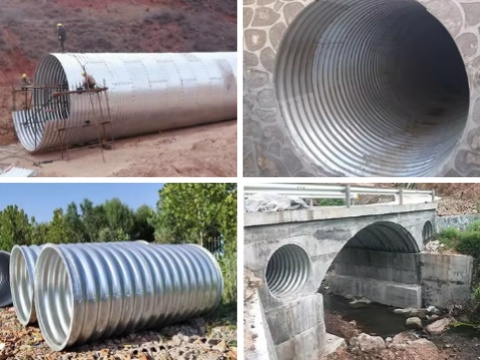
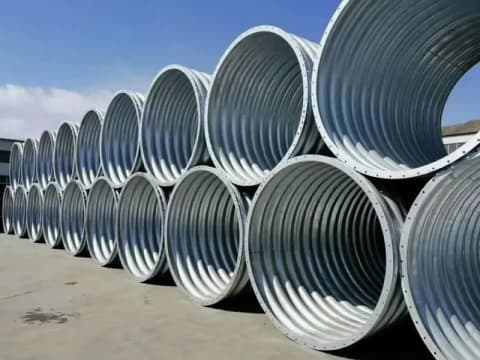
- Circular culvert: The most common standard form, with uniform stress distribution, suitable for most highway and railway culverts and drainage projects.
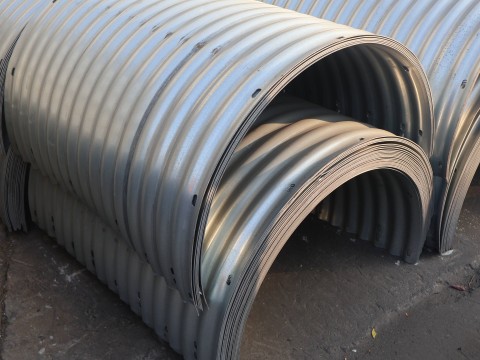
- Arched culvert: With an arched top and a flat bottom. Suitable for scenarios with low fill height but requiring large clearance for passage, such as shallow-buried highway underpasses.
- Elliptical/oval culvert: Combining the characteristics of circular and arched shapes, it provides a larger hydraulic cross-section than circular pipes under low fill conditions, commonly used in municipal drainage.
- Horseshoe/box culvert: Large cross-section, high capacity, can also serve as a small passageway, often used in heavy-load, high-flow areas.
2. Classified by assembly method
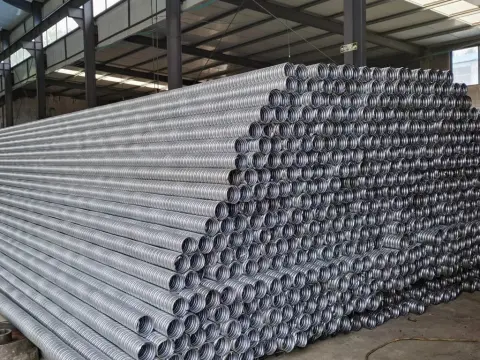
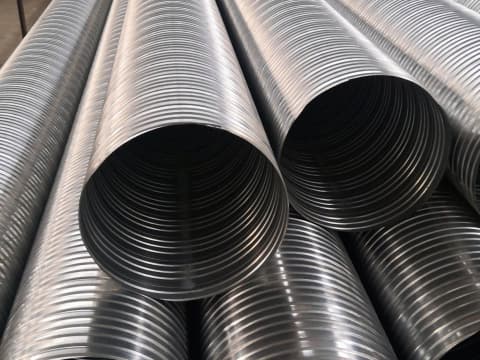
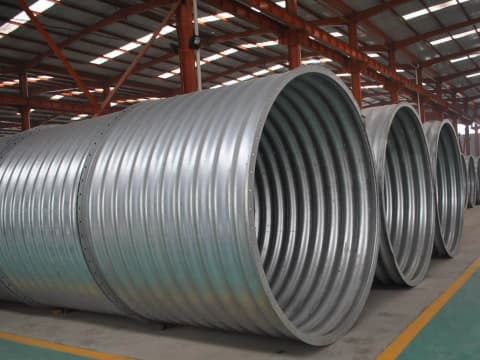
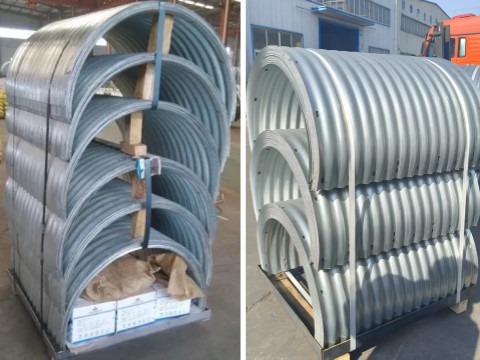
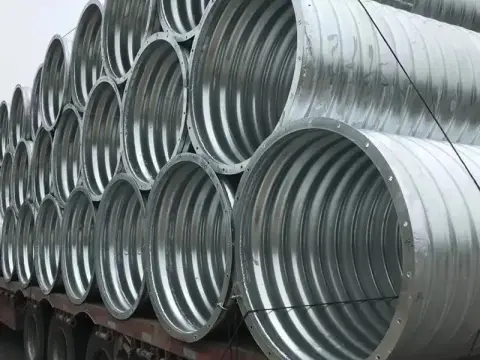
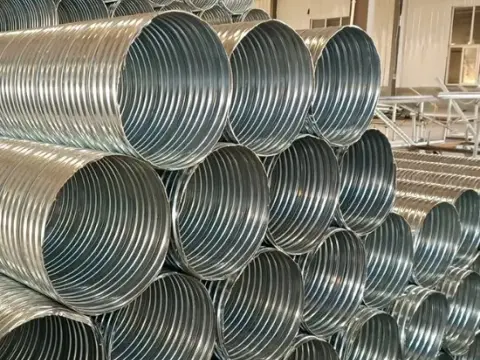
- Prefabricated culverts: These are manufactured as a single unit in the factory and then directly hoisted onto the site.
- Assembled culverts: Corrugated steel plates are transported to the site and assembled using high-strength bolts.
3. Classification by structure and use
- Standard Corrugated Culvert: Basic type, used for general drainage and roadbed drainage.
- Reinforced/Strengthened Culvert: Thicker walls or with reinforcing ribs, suitable for heavy-duty roads and under bridges.
- Flared/U-End Culvert: Flared inlet and outlet to reduce water erosion and prevent siltation.
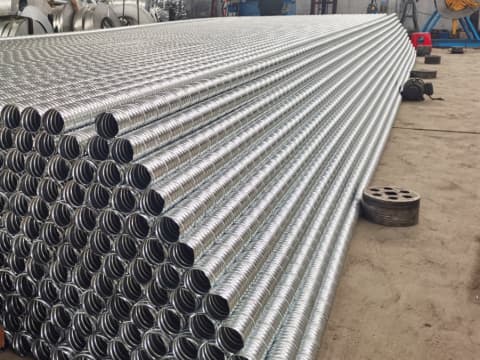
- Spiral Rib/Reinforced Rib Culvert: Spiral reinforcing ribs on the outer wall for higher overall rigidity.
Main connection methods of galvanized culverts
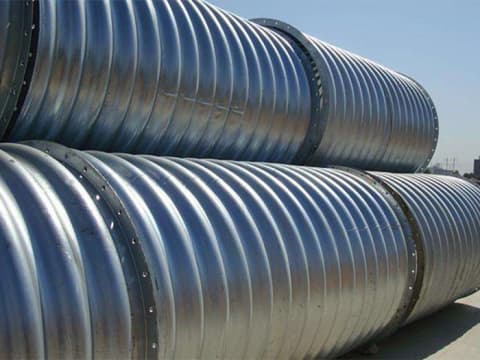
1. Flange connection
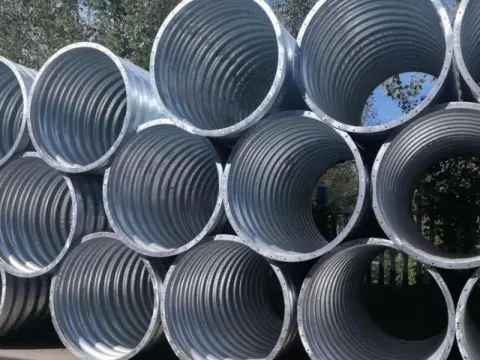
The standard configuration for prefabricated culverts is a prefabricated pipe with a diameter ≤2.5m. Flanges are welded or rolled at both ends of the culvert, and the two flanges are fastened on site with bolts.
2. High-strength bolt lap joint
The most common connection method for large-diameter culverts with a diameter of 1.5 meters or more is segmented assembly with overlapping joints between the segments. High-strength 8.8 grade bolts are used for fastening.
3. Clamp/Grip Connection
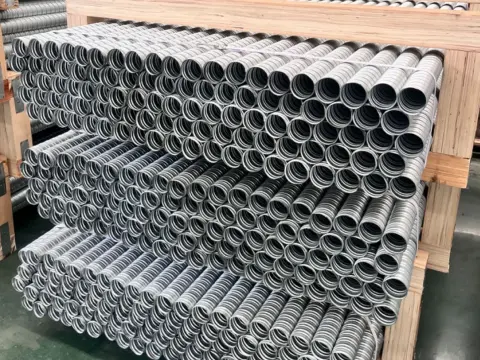
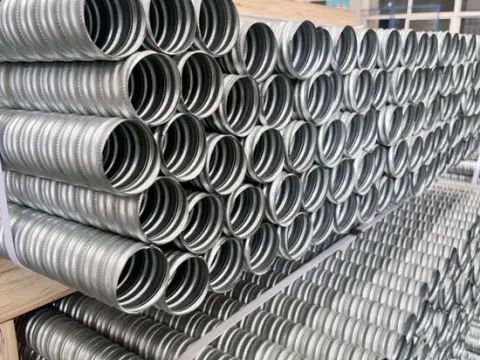
Pipe ends are grooved, and the two pipe joints are secured with corrugated clamps and bolted in place. This replaces flanges, allowing for faster installation. Suitable for small to medium diameter pipes ≤1.5m.
4. Socket connection
Small-diameter pipes are flared at one end and inserted at the other end, then sealed with glue. They are mostly used for short sections and temporary projects.
Selection and Connection Overview
| Diameter | Assembly | Connection |
| ≤ 1.5m | One-piece | Flange / Coupling |
| 1.5–3m | 3-4 piece | Bolted lap |
| ≥ 3m | Multi-piece | Bolted lap |
Dimension representation method
- Nominal Diameter: DN + numerical value (unit: mm or m).
- Wall Thickness: Write the numerical value directly (unit: mm).
- Corrugation Profile: Wavelength × Waveheight.
- Section Length: Numerical value (unit: m).
Standard Size Chart
Prefabricated galvanized culvert pipe
| DN (m) | Common wall thickness(mm) | Single section length (m) | Waveform (mm) |
|---|---|---|---|
| 0.5 | 2.0-3.0 | 2.0-3.0 | 125×25 |
| 0.75 | 2.5-3.0 | 2.0-3.0 | 125×25 |
| 1.0 | 3.0-3.5 | 2.0-3.0 | 125×25 / 200×55 |
| 1.5 | 3.0-4.0 | 2.0-3.1 | 200×55 |
| 2.0 | 3.5-4.5 | 2.0-3.1 | 200×55 |
| 2.5 | 4.0-5.0 | 2.0-3.1 | 200×55 |
Assembled galvanized culvert pipe
| DN (m) | WT (mm) | Single section length (m) | Number of splicing pieces | Waveform (mm) |
|---|---|---|---|---|
| 3.0 | 4.0-5.0 | 1.2-2.0 | 3 pieces | 200×55 |
| 4.0 | 5.0-6.0 | 1.2-2.0 | 4 pieces | 200×55 / 300×110 |
| 5.0 | 6.0-7.0 | 1.2-2.0 | 5 pieces | 300×110 |
| 6.0 | 7.0-8.0 | 1.2-2.0 | 6 pieces | 300×110 / 400×150 |
| 8.0+ | 8.0-12.0 | 1.2-2.0 | Customized | 400×150+ |
Weight-Length Conversion Table
Round, fully-assembled tube (waveform 125×25mm / 200×55mm)
| DN (mm) | WT(mm) | Waveform (mm) | Weight (kg/m) |
|---|---|---|---|
| 500 | 2.5 | 125×25 | 32.5 |
| 500 | 3.0 | 125×25 | 39.0 |
| 750 | 2.5 | 125×25 | 48.2 |
| 750 | 3.0 | 125×25 | 57.8 |
| 1000 | 3.0 | 125×25 | 76.5 |
| 1000 | 3.5 | 200×55 | 92.3 |
| 1500 | 3.0 | 200×55 | 121.8 |
| 1500 | 3.5 | 200×55 | 142.1 |
| 2000 | 3.5 | 200×55 | 182.5 |
| 2000 | 4.0 | 200×55 | 208.7 |
| 2500 | 4.0 | 200×55 | 253.2 |
| 2500 | 4.5 | 200×55 | 285.4 |
Circular assembled tube (waveform 200×55mm / 300×110mm)
| DN (mm) | WT(mm) | Waveform (mm) | Weight (kg/m) |
|---|---|---|---|
| 3000 | 4.0 | 200×55 | 301.6 |
| 3000 | 5.0 | 300×110 | 382.9 |
| 4000 | 5.0 | 300×110 | 503.7 |
| 4000 | 6.0 | 300×110 | 604.4 |
| 5000 | 6.0 | 300×110 | 752.1 |
| 5000 | 7.0 | 300×110 | 877.5 |
| 6000 | 7.0 | 400×150 | 1024.3 |
| 6000 | 8.0 | 400×150 | 1170.7 |
General weight calculation formula
Weight per meter (kg/m) = π × nominal inner diameter (m) × wall thickness (mm) × 7.85 × 1.03/1
- 7.85: Steel density (g/cm³), use directly after conversion
- 1.03: Correction factor including galvanized layer (approximately 3%, can be adjusted according to the actual galvanized layer thickness
Production steps of galvanized culverts
Raw material inspection → Steel plate leveling and shearing → Corrugated forming → Bending and rolling → Welding/assembly → End face grinding → Hot-dip galvanizing → Cooling and cleaning → Flange/connector processing → Sealing assembly → Finished product inspection → Packaging and shipping
Why choose Glory Steel?
We specialize in producing high-quality galvanized corrugated culverts, maintaining strict control throughout the entire process from raw materials and production to quality inspection. We provide reliable, durable, and cost-effective solutions for highway, railway, municipal drainage, and bridge projects.
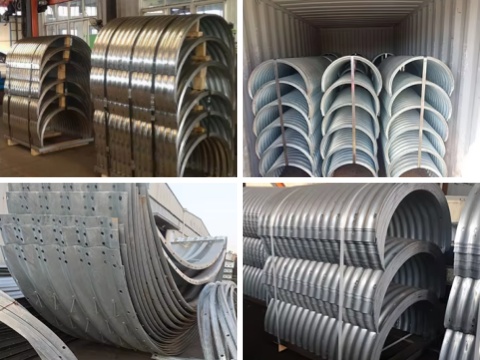
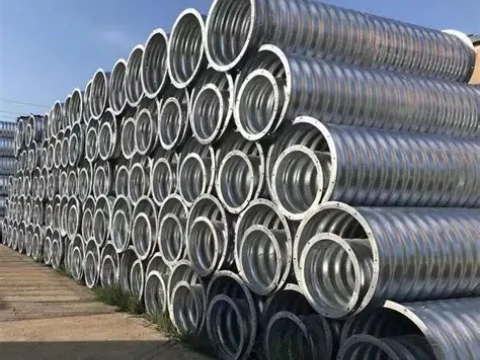
- Superior Craftsmanship: Utilizing national standard Q235/Q355 carbon structural steel plates, we employ high-temperature hot-dip galvanizing, ensuring corrosion resistance and aging resistance.
- Customization: We offer various cross-sectional shapes. Diameters range from 0.5 meters to over 8 meters, and both complete and assembled production are available. Customized pipe diameters, wall thicknesses, lengths, and connection methods are also possible.
- Rigorous Quality Inspection: Multiple inspections, including galvanized layer thickness testing and strength testing, ensure our products meet domestic and international engineering standards, guaranteeing stable and reliable quality.
- Professional Service: From selection, quotation, production to logistics and after-sales service, we provide one-stop service and can offer professional solutions tailored to project conditions.
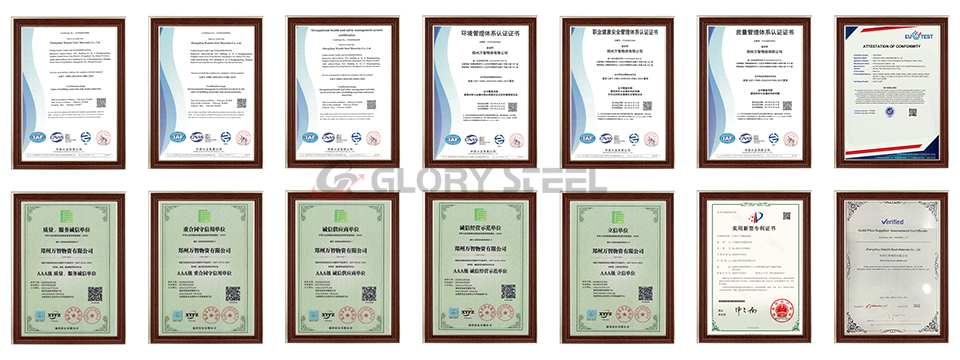
Glory Steel Plant, located in Tianjin, China, is an ISO 9001, ISO 14001, and CE certified factory with an annual output of 100,000 tons. We specialize in producing CMP, GI Steel Corrugated Drainage Pipe, Galvanized Highway Culvert Pipes, and Coated Galvanized Culvert Pipes. With our high-quality products and services, we export to over 120 countries.
Mon-Fri: 8:00 - 18:00 (GMT+8)