Steel pipe unit weight is a core basis for calculation in steel pipe trading, project cost estimation, and construction management. Accurate weight calculation helps enterprises effectively control procurement costs, ensure transportation and hoisting safety, and guarantee overall structural reliability.
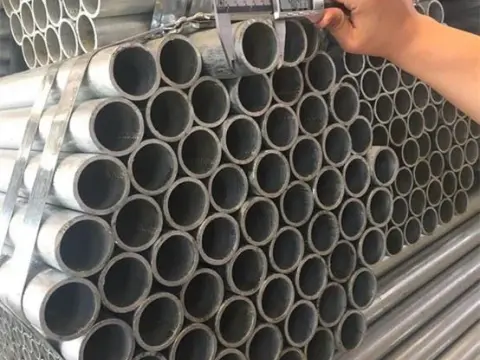
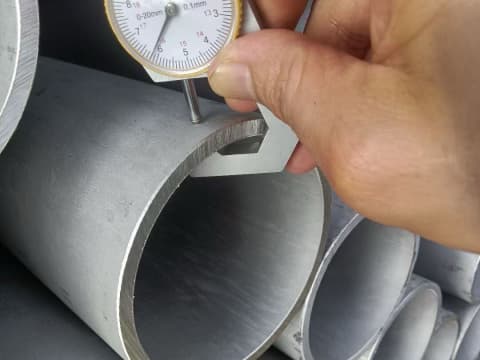
This article systematically sorts out the standard meter and foot weight calculation formulas for national and international steel pipes, covering mainstream carbon steel and stainless steel round pipe specifications. It solves common difficulties in metric and imperial unit conversion and weight estimation for daily engineering and foreign trade work.
Key Factors Determining Steel Pipe Weight
The theoretical weight of a steel pipe is not fixed. It is mainly affected by outer diameter, wall thickness, and material density:
- Outer Diameter (OD): The outer width of the pipe, commonly measured in millimeters (mm) or inches (inch), serving as the basic parameter for pipe classification.
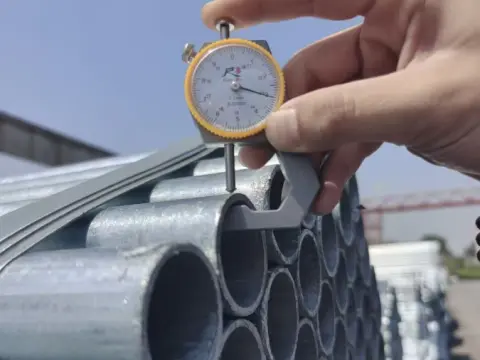
- Wall Thickness (WT): The thickness of the pipe wall, defined by Schedule grades (Sch 40, Sch 80, etc.) or specific millimeter values. A thicker wall results in higher pipe weight and stronger pressure resistance.
- Material Density: Carbon steel is generally 7.85 g/cm³ (7850 kg/m³); austenitic stainless steel 304/304L is about 7.93 g/cm³; 316/316L stainless steel is about 7.98 g/cm³.
Important Note
The nominal pipe size (such as NPS 4) is only a specification code and does not represent the actual outer diameter. Weight calculation must be based on real OD and wall thickness data.
Core Calculation Principle
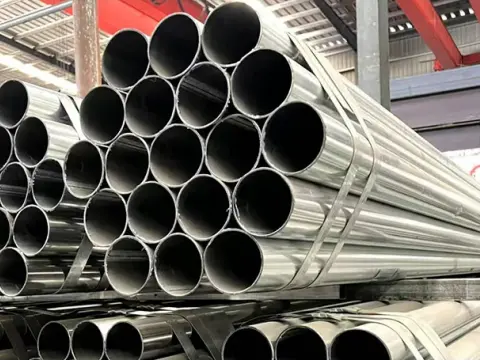
Steel pipe theoretical weight is calculated based on standard steel density. The conventional density of carbon steel is 7850 kg/m³ (7.85 g/cm³), which is the universal industry standard.
The core calculation formula: Pipe wall cross-sectional area × Pipe length × Steel density. Based on this principle, simplified metric and imperial formulas are derived for fast and accurate calculation without complex manual deduction.
Recommended: Use our professional steel pipe weight calculator to avoid manual calculation errors and improve efficiency.
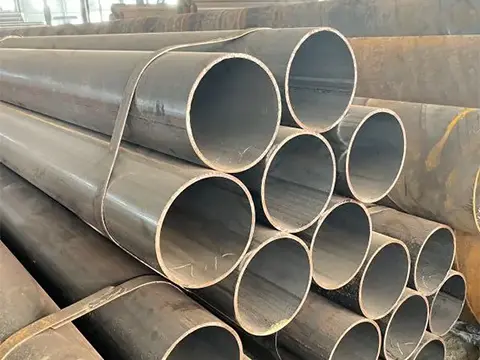
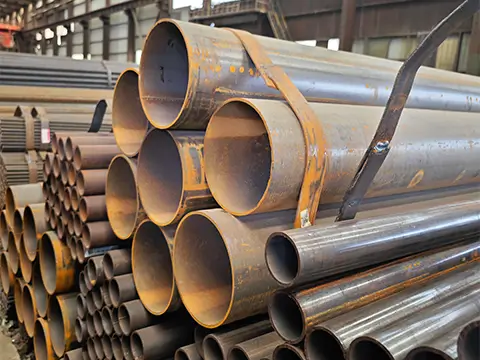
Standard Steel Pipe Weight Calculation Formulas
1. Metric Formula: Weight Per Meter (kg/m)
- Carbon Steel Pipe: W = 0.02466 × (OD – WT) × WT
- Stainless Steel Pipe: W = (OD − WT) × WT × 0.02491
Parameter Description: OD and wall thickness are in millimeters (mm); the result stands for theoretical weight per meter (kg/m).
2. Imperial Formula: Weight Per Foot (lb/ft)
Universal Formula: W = 10.68 × (OD – WT) × WT
Parameter Description: OD and wall thickness are in inches (in); the result stands for theoretical weight per foot (lb/ft), widely used in overseas projects and export quotations.
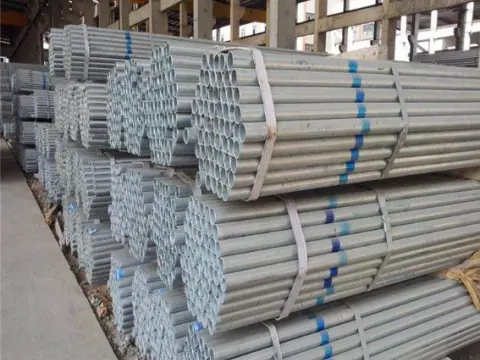
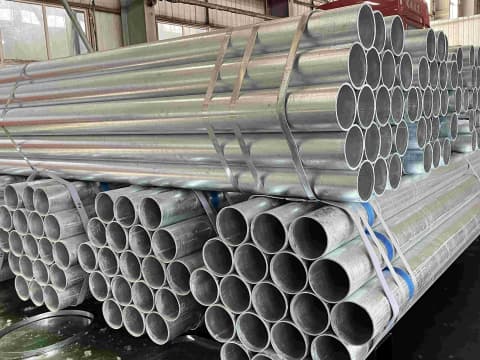
General Steel Pipe Weight Chart (DN Standard)
This table covers common carbon steel pipe specifications for domestic construction and municipal engineering.
| Nominal Diameter | Outer Diameter (mm) | Wall Thickness (mm) | Weight (kg/m) | Weight (lb/ft) |
|---|---|---|---|---|
| DN20 | 26.9 | 2.75 | 1.63 | 1.09 |
| DN25 | 33.7 | 3.25 | 2.42 | 1.62 |
| DN32 | 42.4 | 3.25 | 3.13 | 2.10 |
| DN40 | 48.3 | 3.50 | 3.84 | 2.58 |
| DN50 | 60.3 | 3.80 | 4.88 | 3.28 |
| DN65 | 76.1 | 4.00 | 6.26 | 4.21 |
| DN80 | 88.9 | 4.00 | 7.38 | 4.96 |
| DN100 | 114.3 | 4.00 | 9.54 | 6.42 |
| DN125 | 139.7 | 4.00 | 11.85 | 7.98 |
| DN150 | 168.3 | 4.50 | 15.04 | 10.13 |
Carbon Steel Pipe Weight Chart (Sch 40)
Standard SCH40 carbon steel pipe data for international trade and overseas engineering.
| NPS | Outer Diameter (mm) | Wall Thickness (mm) | Weight (kg/m) | Weight (lb/ft) |
|---|---|---|---|---|
| 1/2″ | 21.3 | 2.77 | 1.27 | 0.85 |
| 3/4″ | 26.7 | 2.87 | 1.69 | 1.14 |
| 1″ | 33.4 | 3.38 | 2.50 | 1.68 |
| 1-1/4″ | 42.2 | 3.56 | 3.39 | 2.28 |
| 1-1/2″ | 48.3 | 3.68 | 4.05 | 2.72 |
| 2″ | 60.3 | 3.91 | 5.44 | 3.66 |
| 2-1/2″ | 73.0 | 5.16 | 8.63 | 5.80 |
| 3″ | 88.9 | 5.49 | 11.29 | 7.58 |
| 4″ | 114.3 | 6.02 | 16.07 | 10.80 |
| 6″ | 168.3 | 7.11 | 28.26 | 18.98 |
| 8″ | 219.1 | 8.18 | 42.55 | 28.58 |
| 12″ | 323.9 | 10.31 | 81.68 | 54.87 |
| 16″ | 406.4 | 9.53 | 93.27 | 62.58 |
| 24″ | 609.6 | 9.53 | 141.02 | 94.62 |
Stainless Steel Pipe Weight Chart (Sch 40S, 304 Grade)
Stainless steel pipes comply with ASME B36.19M standard. Stainless steel Schedule grades are marked with the letter “S” (5S, 10S, 40S, 80S). Sch 40S for stainless steel is not equivalent to carbon steel Sch 40, as wall thickness and weight differ significantly for the same nominal size.
| NPS | Outer Diameter (mm) | Wall Thickness (mm) | Weight (kg/m) | Weight (lb/ft) |
|---|---|---|---|---|
| 1/2″ | 21.34 | 2.77 | 1.29 | 0.87 |
| 3/4″ | 26.67 | 2.87 | 1.72 | 1.16 |
| 1″ | 33.40 | 3.38 | 2.55 | 1.71 |
| 1-1/4″ | 42.16 | 3.56 | 3.45 | 2.32 |
| 1-1/2″ | 48.26 | 3.68 | 4.12 | 2.77 |
| 2″ | 60.33 | 3.91 | 5.53 | 3.72 |
| 2-1/2″ | 73.03 | 5.16 | 8.79 | 5.91 |
| 3″ | 88.90 | 5.49 | 11.50 | 7.73 |
| 4″ | 114.30 | 6.02 | 16.35 | 10.99 |
| 6″ | 168.28 | 7.11 | 28.74 | 19.31 |
| 8″ | 219.08 | 8.18 | 43.22 | 29.04 |
| 12″ | 323.85 | 9.53 | 75.24 | 50.56 |
| 16″ | 406.40 | 9.53 | 94.82 | 63.72 |
| 24″ | 609.60 | 9.53 | 143.41 | 96.37 |
Weight Differences of Different Schedule Grades
Under the same outer diameter, higher Schedule grade means thicker wall thickness and heavier unit weight, bringing higher pressure resistance and structural stability.
Take carbon steel pipe NPS 2 (OD 60.3 mm) as an example:
- Sch 10: Wall thickness 2.77 mm, weight ≈ 3.93 kg/m
- Sch 40: Wall thickness 3.91 mm, weight ≈ 5.44 kg/m
- Sch 80: Wall thickness 5.54 mm, weight ≈ 7.48 kg/m
- Sch 160: Wall thickness 8.74 mm, weight ≈ 11.11 kg/m
The weight can nearly triple from Sch 10 to Sch 160. Therefore, procurement orders must specify the exact Schedule grade or wall thickness. Only marking the nominal inch size cannot confirm the accurate weight and application standard.
Important Notes for Weight Calculation
1. Deviation Between Theoretical Weight and Actual Weight
All data in the charts are standard theoretical weights. Actual delivery weight may deviate due to manufacturing tolerances:
- Outer diameter tolerance (NPS 2–8): +1.59 / −0.79 mm
- Wall thickness tolerance: Seamless pipe +20% / −12.5%; welded pipe ±12.5%
In extreme cases, the actual weight may be 7%–10% higher or 5%–10% lower than the theoretical value. It is recommended to reserve a safety margin when calculating transportation costs and hoisting loads.
2. Material Coefficient Distinction
The coefficient 0.02466 is only applicable to carbon steel pipes. 304 and 316 stainless steel pipes adopt the dedicated coefficient 0.02491 for accurate calculation.
3. Special Pipe Explanation
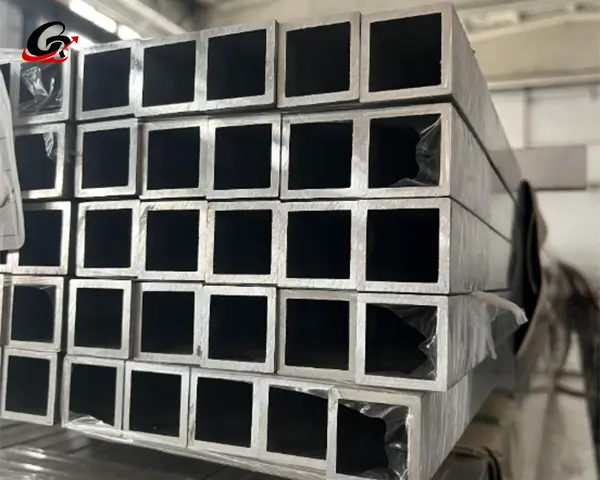
The above formulas and weight charts apply only to round steel pipes. Square pipes, rectangular pipes and special-shaped pipes require exclusive calculation formulas to avoid errors.

Conclusion
Mastering accurate per-meter and per-foot weight calculation methods can greatly improve quotation efficiency and reduce calculation errors in steel pipe business. This article covers standard parameters of mainstream carbon steel and stainless steel pipes, suitable for construction, chemical, power, municipal, and international trade projects as a daily reference guide.
We will continuously update full-spec steel pipe weight charts, special-shaped pipe calculation guides, and metric-imperial conversion tools. Follow us for the latest industry standards and technical resources.